Blockhead: CNC Fixture for Oversized Sculpture
Custom workholding to cut a piece that exceeded the machine's standard capacity
"The client's sculpture — a stylized human figure — has a body approximately 6" thick and a head roughly 12" square. Both dimensions exceed what our CNC table can accommodate with standard workholding. Off-the-shelf solutions don't exist for this geometry."
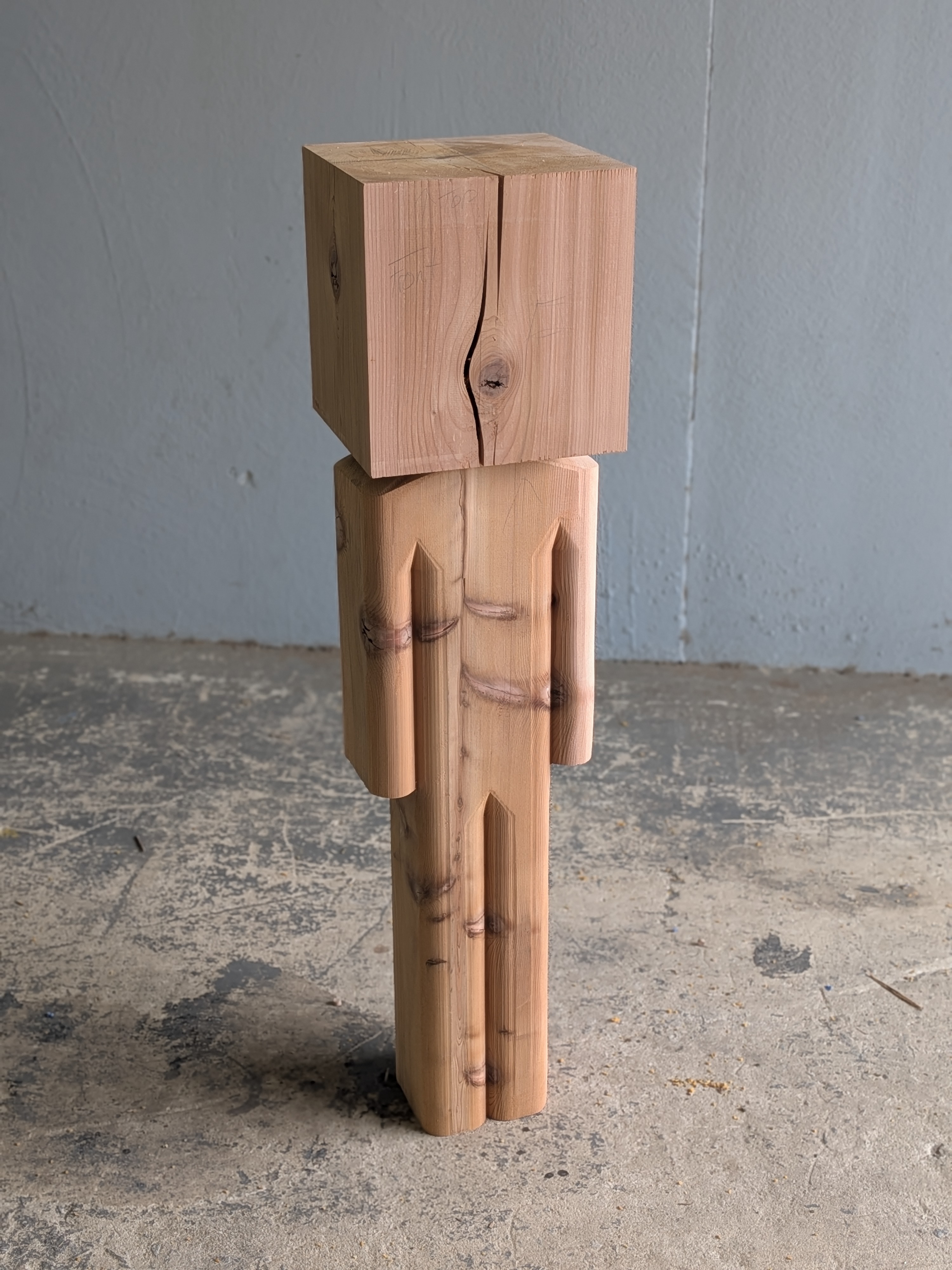
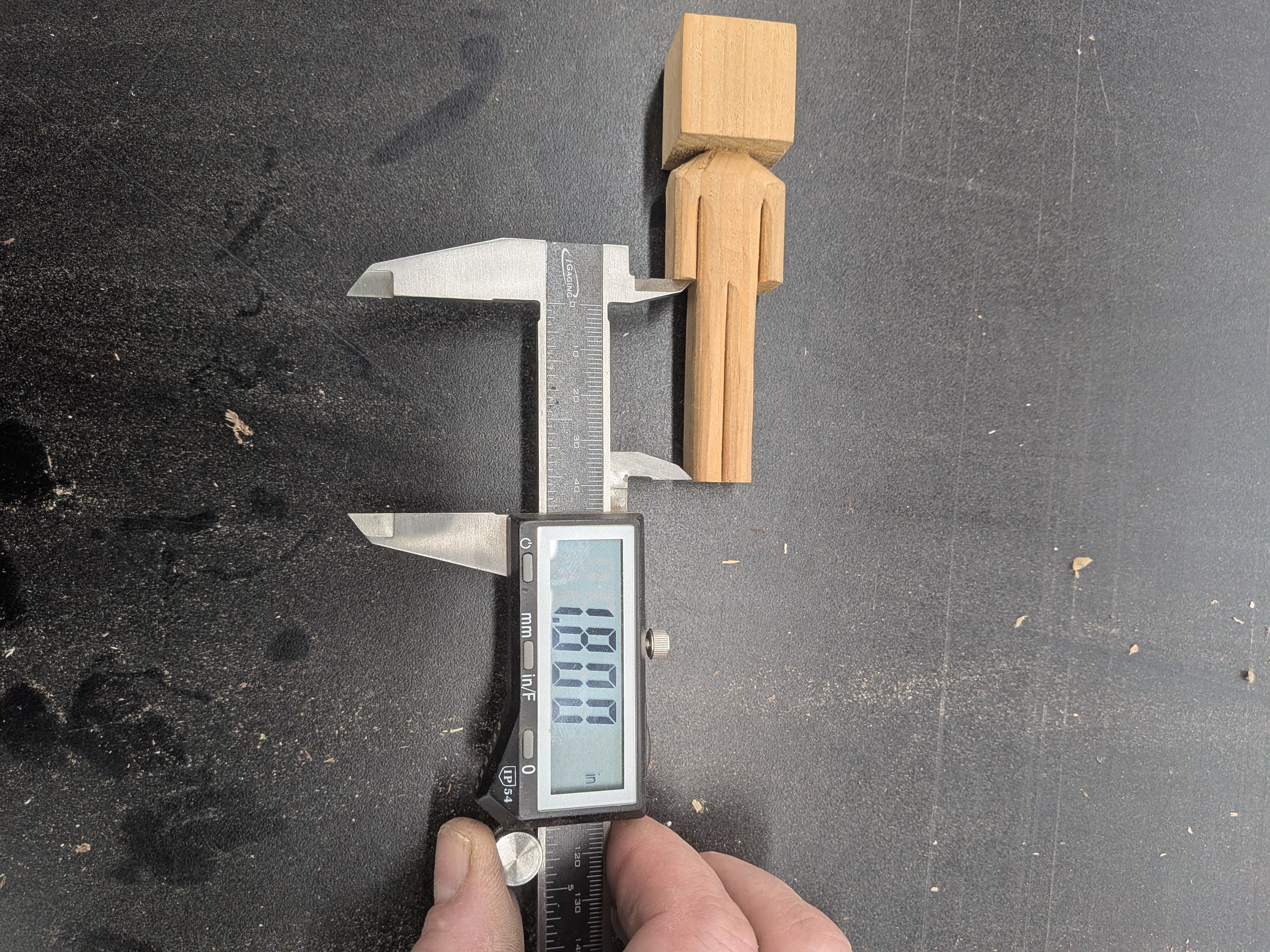
Blockhead is an Atlanta-based artist who makes wooden sculptural figures — stylized human forms that he’d been carving largely by hand. The work was good. The process was slow. He wanted to know if CNC could take over the heavy roughing work so he could focus on the finishing details that actually require a human.
The answer was yes, with a problem: his pieces were bigger than our machine could handle.
The Constraint
Our CNC table has a standard working envelope. The artist’s figures have a body section approximately 6 inches thick and a head section roughly 12 inches square. In standard configuration — workpiece sitting on top of the spoilboard — the spindle can’t reach the geometry at the depth needed. You can’t cut what the tool can’t reach.
The options were: buy a larger machine (not happening), cut the piece in so many small sections it becomes impractical, or find a way to bring the work surface down into the table so the spindle has the clearance it needs.
The Solution
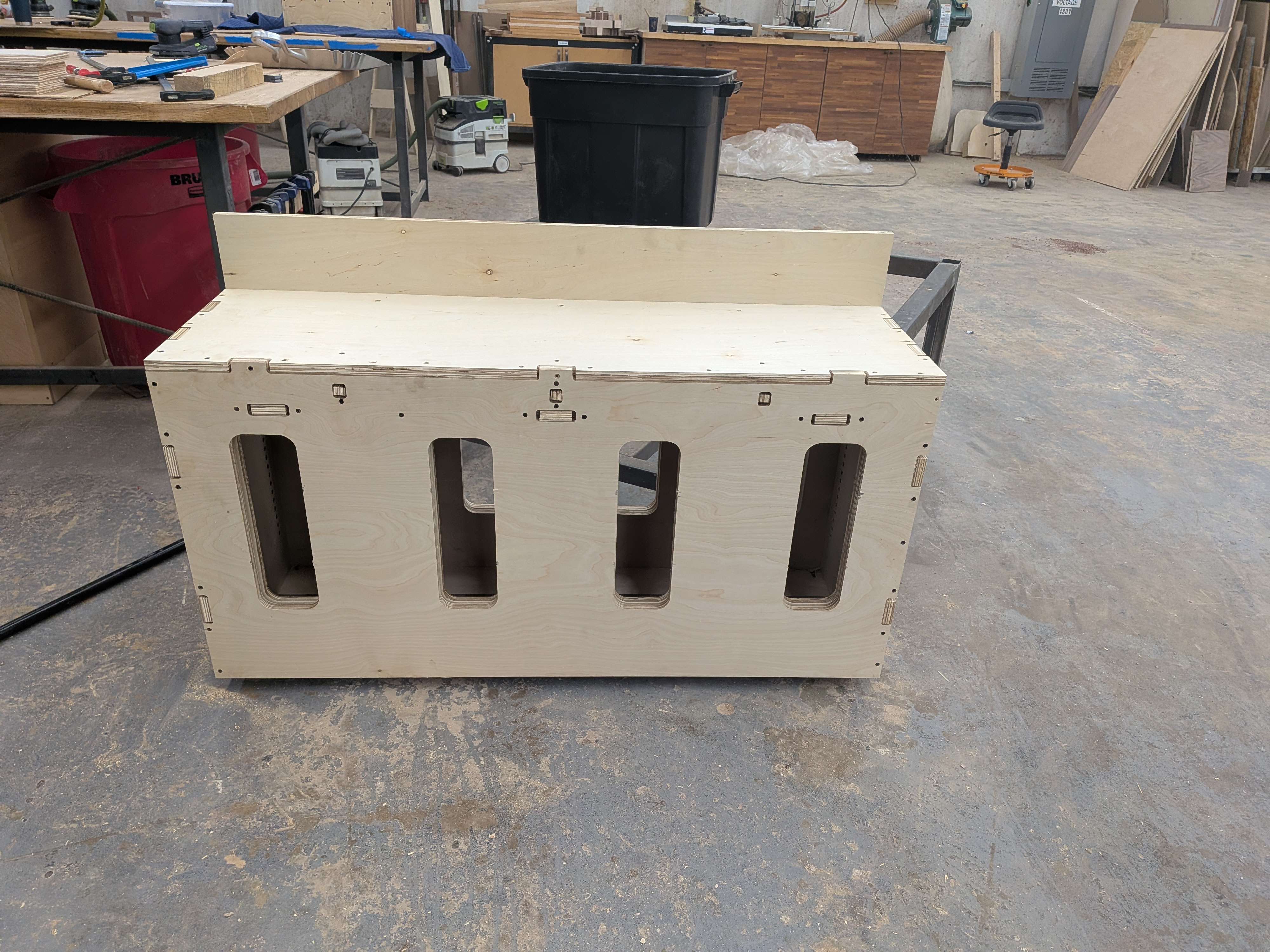
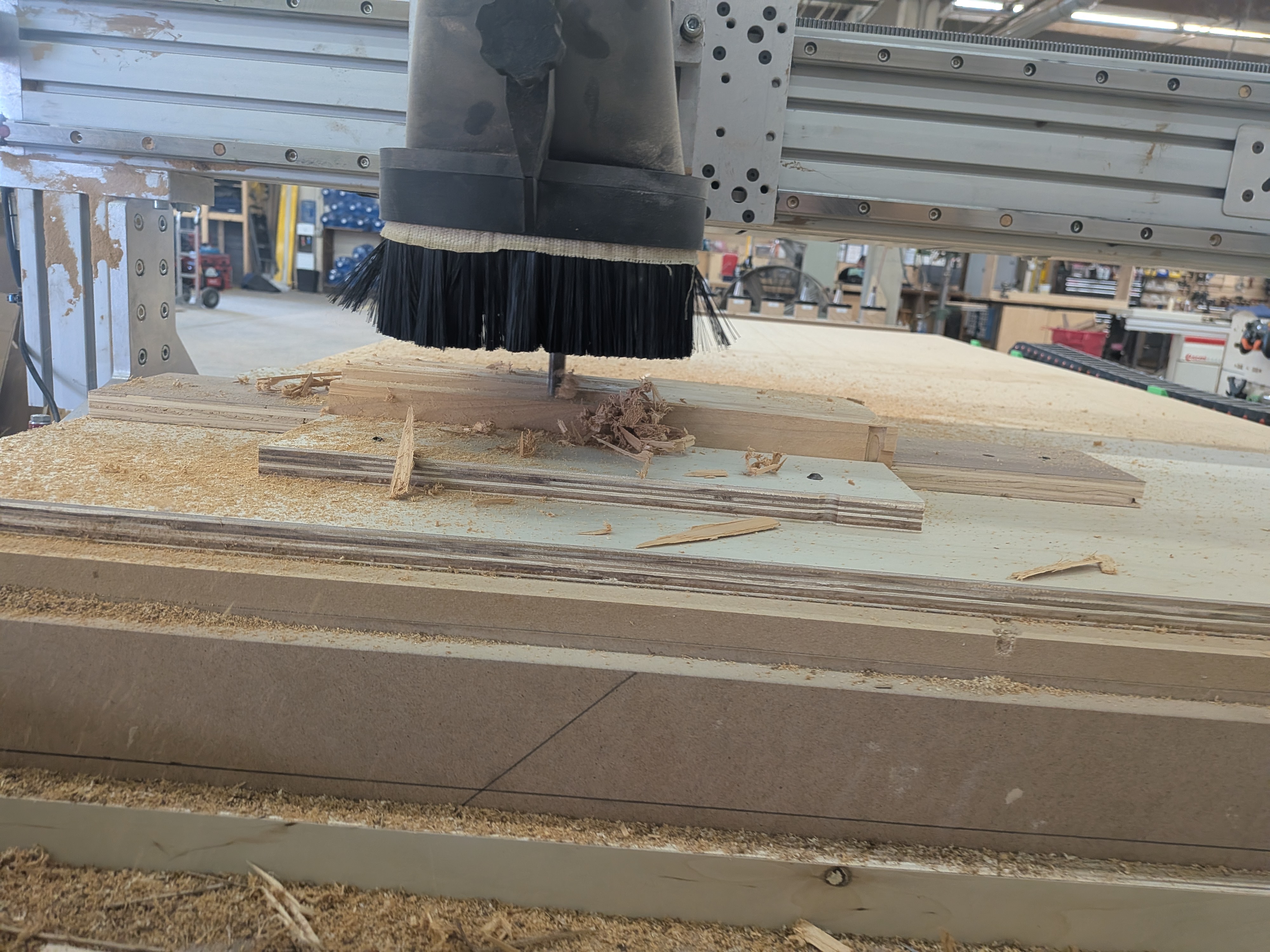
Inset workholding. I built a custom box that drops into the CNC table and holds the sculpture blank below the surrounding spoilboard surface — giving the spindle the clearance it needs to reach full geometry depth. The box has oval cutouts to keep it light without sacrificing rigidity, and it’s height-adjustable: raise or lower it to accommodate blanks of different thicknesses. That adjustability is what makes it a production asset rather than a one-off fix.
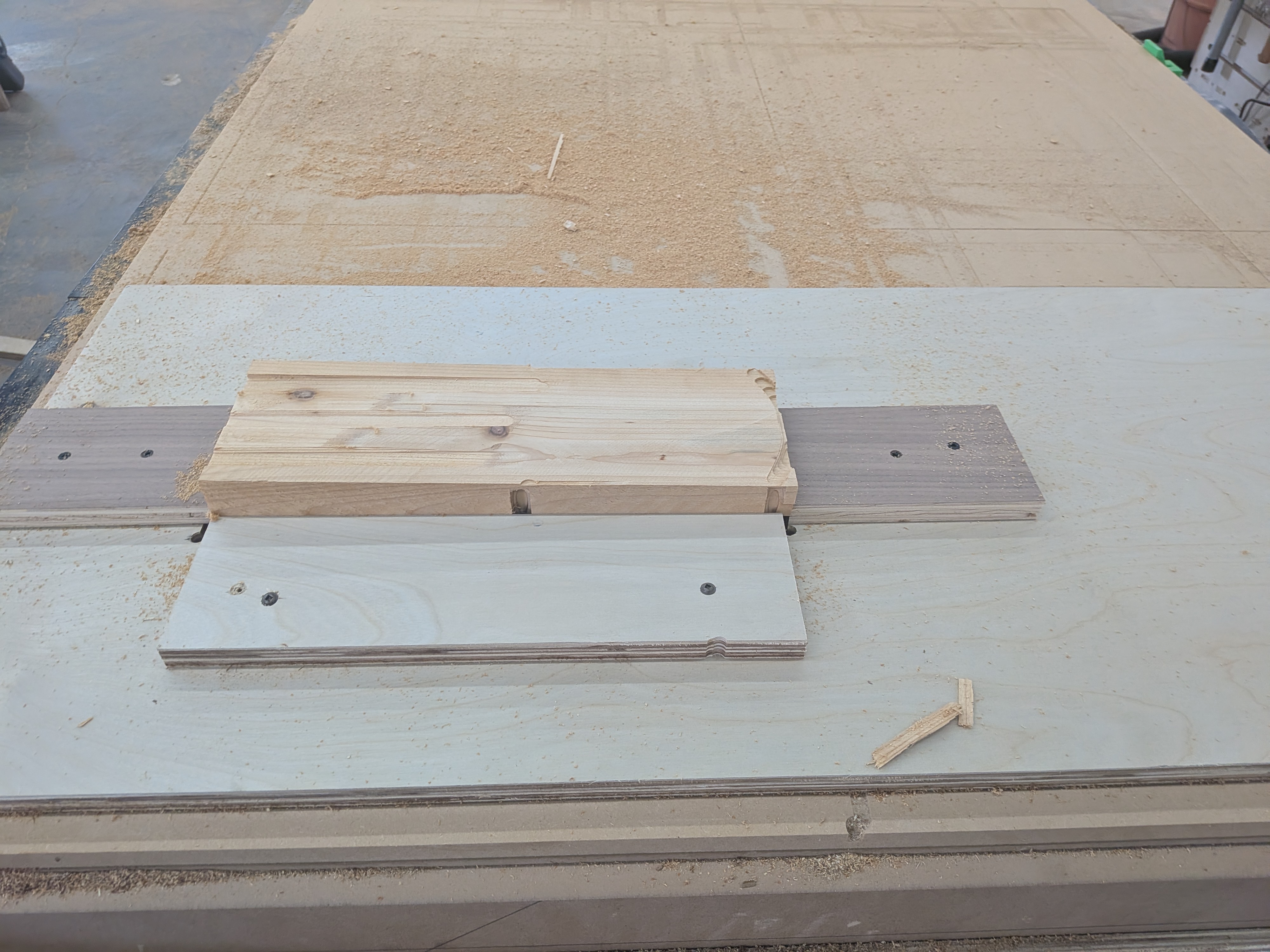
The fixture also needed a track system — two parallel rails that the workpiece registers against — so the piece can be flipped and repositioned between setups without losing zero. If you have to re-establish your datum every time you flip the piece, you’re losing time and introducing registration error on every single part. The tracks solve both problems.
Build and Commission
The new sub-table was built, fitted to the routed pocket, shimmed, and leveled. “Level” here means coplanar with the surrounding spoilboard to within a few thousandths — I confirmed it with a dial indicator tramming pass before running any toolpath. If the inset surface isn’t truly flat relative to the machine’s XY plane, every cut will show the error.
First production run came out clean. The track system held registration across setups. The artist now has a repeatable process for roughing out figures that previously took days of hand work.
What This Demonstrates
This project is about solving a capability gap with engineering rather than equipment budget. The fixture is the solution — and it’s reusable for the entire production run. Build it once, document the leveling procedure, and any operator can reset it after maintenance.
That’s the difference between a one-off workaround and a production asset.
- Solved a machine-capacity problem without buying new equipment
- Custom fixture design is reusable for the full production run — built once, runs indefinitely
- Track system allows repeatable re-registration between setups — no re-zeroing each piece
- Leveling procedure documented so any operator can reset the table after maintenance
- Artist can now focus on design and finishing rather than roughing out every figure by hand
- Ongoing collaboration — Blockhead is designing new work that wouldn't be feasible without the CNC