Guitar Shed Stadium Seating
Custom bench seating for a live music venue
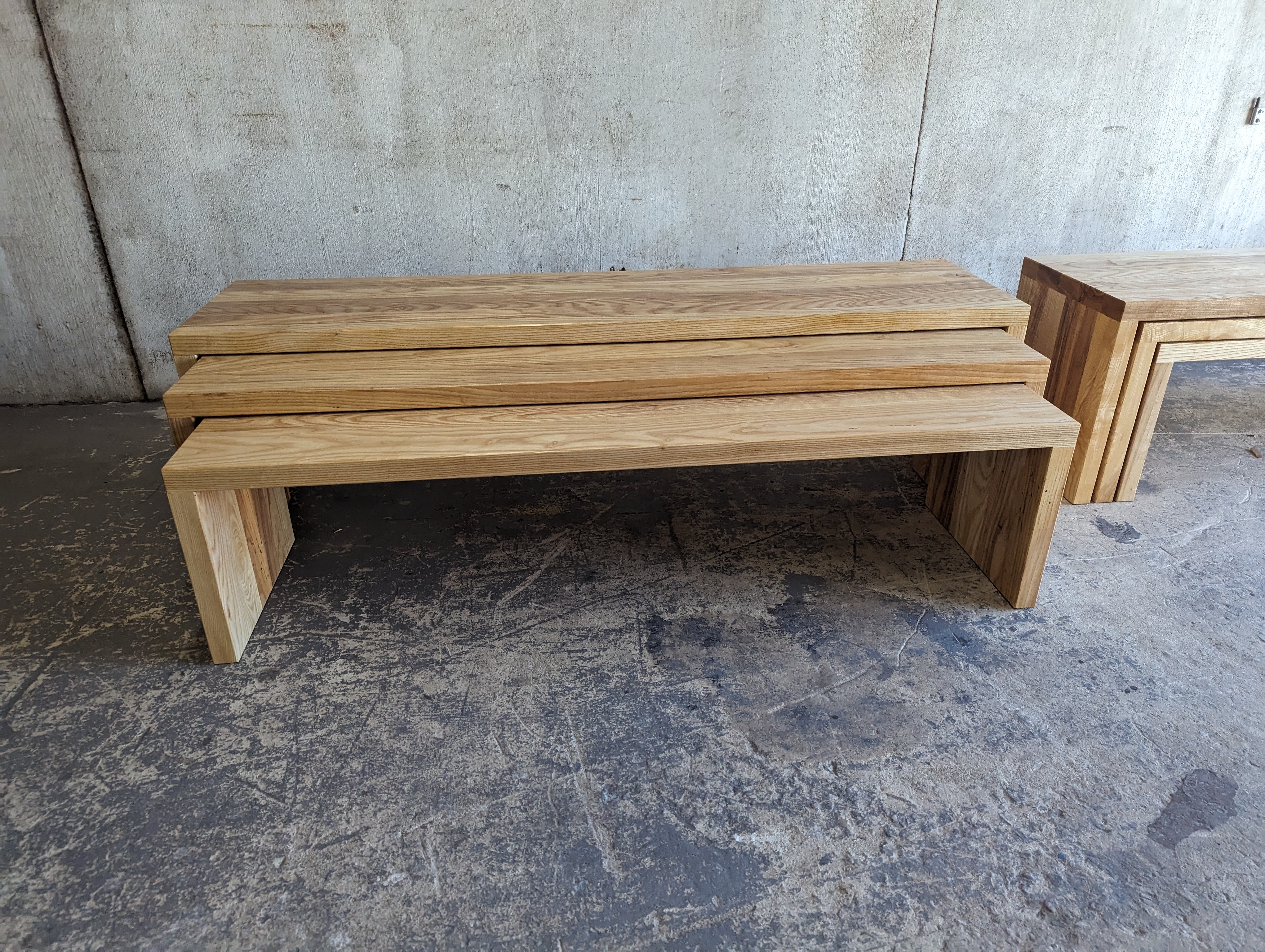
"Maximize seating in a limited floor plan — but the benches had to be storable. Nesting was the solution, which ruled out any apron under the seat. Without an apron, the full span had to be carried by the seat slab alone. That single constraint drove everything: material species, slab thickness, seat widths, and row heights. Too tall and adults are uncomfortable; too short and the stadium geometry doesn't work. Every dimension had to function across a wide range of ages and body sizes."
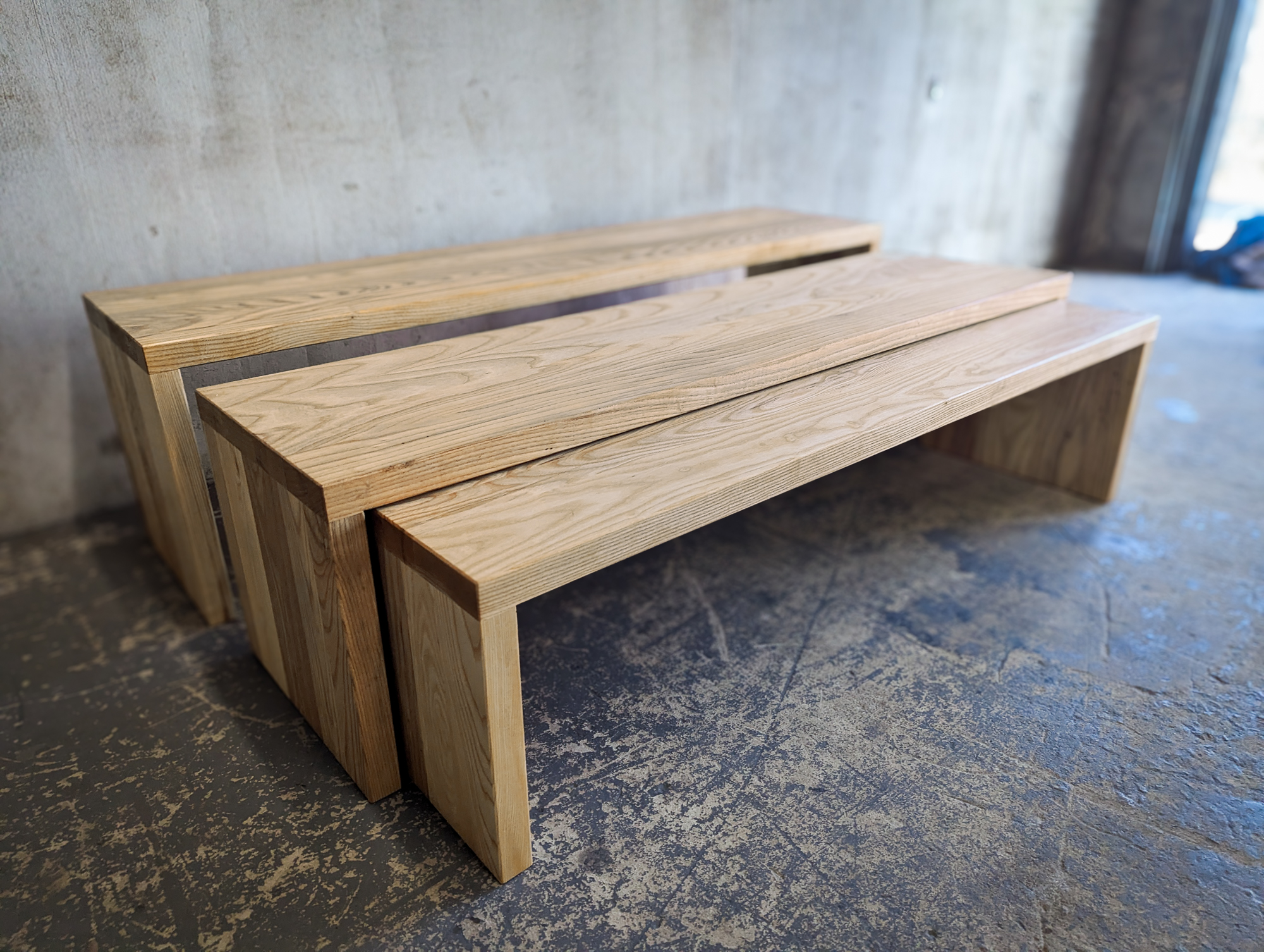
Guitar Shed is a music school in Atlanta’s Kirkwood neighborhood — instruments for kids and adults, welcoming vibe, the kind of place that’s genuinely excited about what it’s doing. The job came in as a referral from another shop that couldn’t fit it into their schedule. The owner connected me with the Guitar Shed team, I had a quick meeting, walked the space, and we worked out what was possible.
The brief was simple in concept: more seating, in the space they already had.
The Constraint
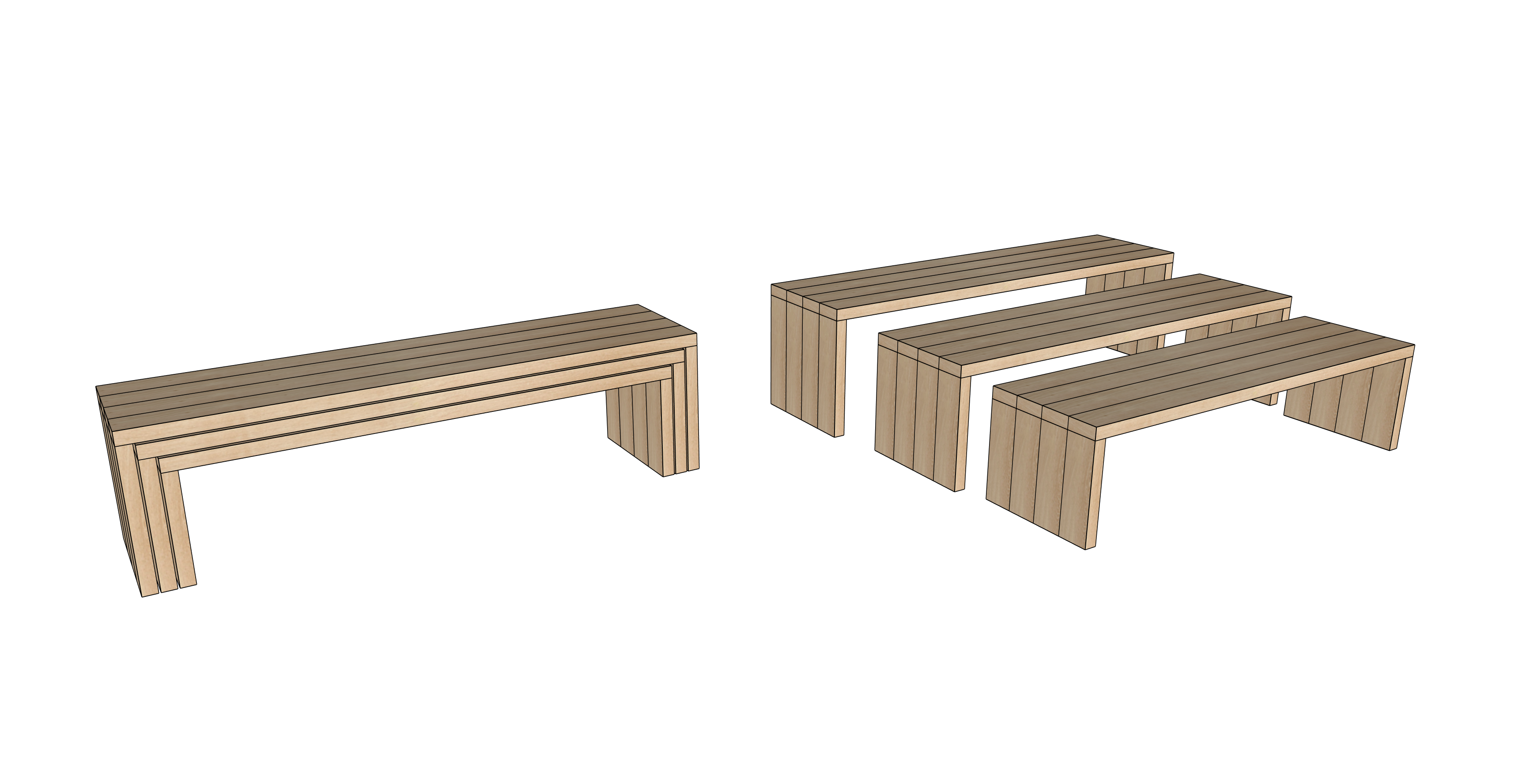
The catch was that the benches couldn’t be permanent. Guitar Shed uses the same room for performances and for classes, which means the seating has to come out when it’s not needed. Nesting was the obvious solution — stadium-style rows that stack when stored.
Nesting ruled out an apron. A standard bench has an apron running underneath the seat between the legs — it’s where the structure lives. A nested bench can’t have that, because the apron is exactly where the bench in front needs to go. Without an apron, the seat slab has to carry the full span on its own.
That one constraint drove every other decision: species, thickness, seat width, leg placement, height. Once you accept that the slab is the structure, you work backward from what the slab can do. We landed on two sets, with the smallest bench seating three people comfortably and the longest seating four.
Material and Build
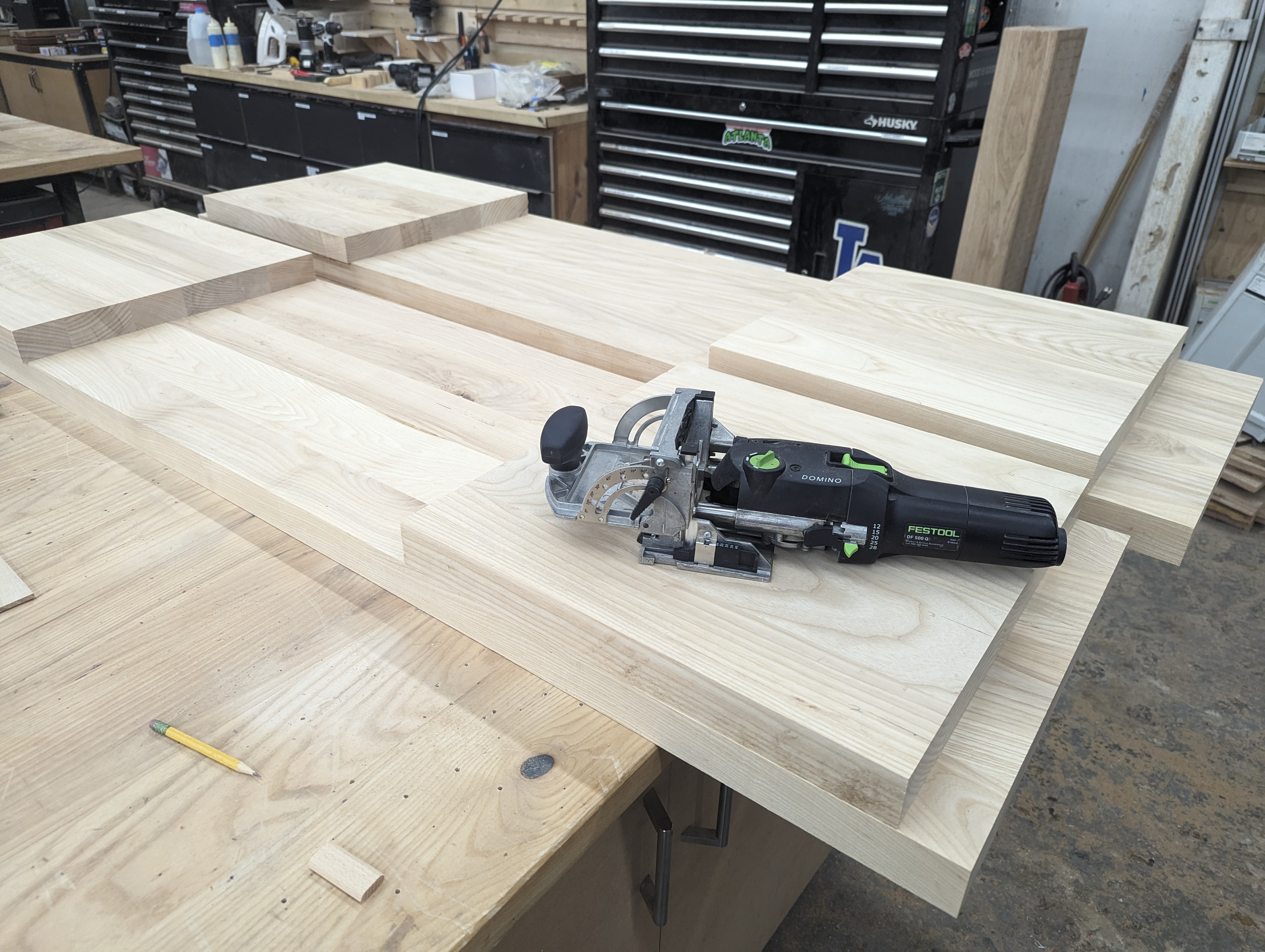
Ash, from 8/4 stock — kept as thick as possible through the milling process. Ash is hard, stable, and takes a clear finish well. The thickness wasn’t aesthetic; it was structural. A thinner slab in the same span would flex under load. We needed the material to do the work the apron wasn’t there to do.
Finish was hard wax oil. A film finish — lacquer, polyurethane — would look great on day one and be a problem on day three hundred. Hard wax oil penetrates rather than films, which means wear is gradual rather than catastrophic, and maintenance is simple: clean the surface and recoat. For a school with daily use, that matters.
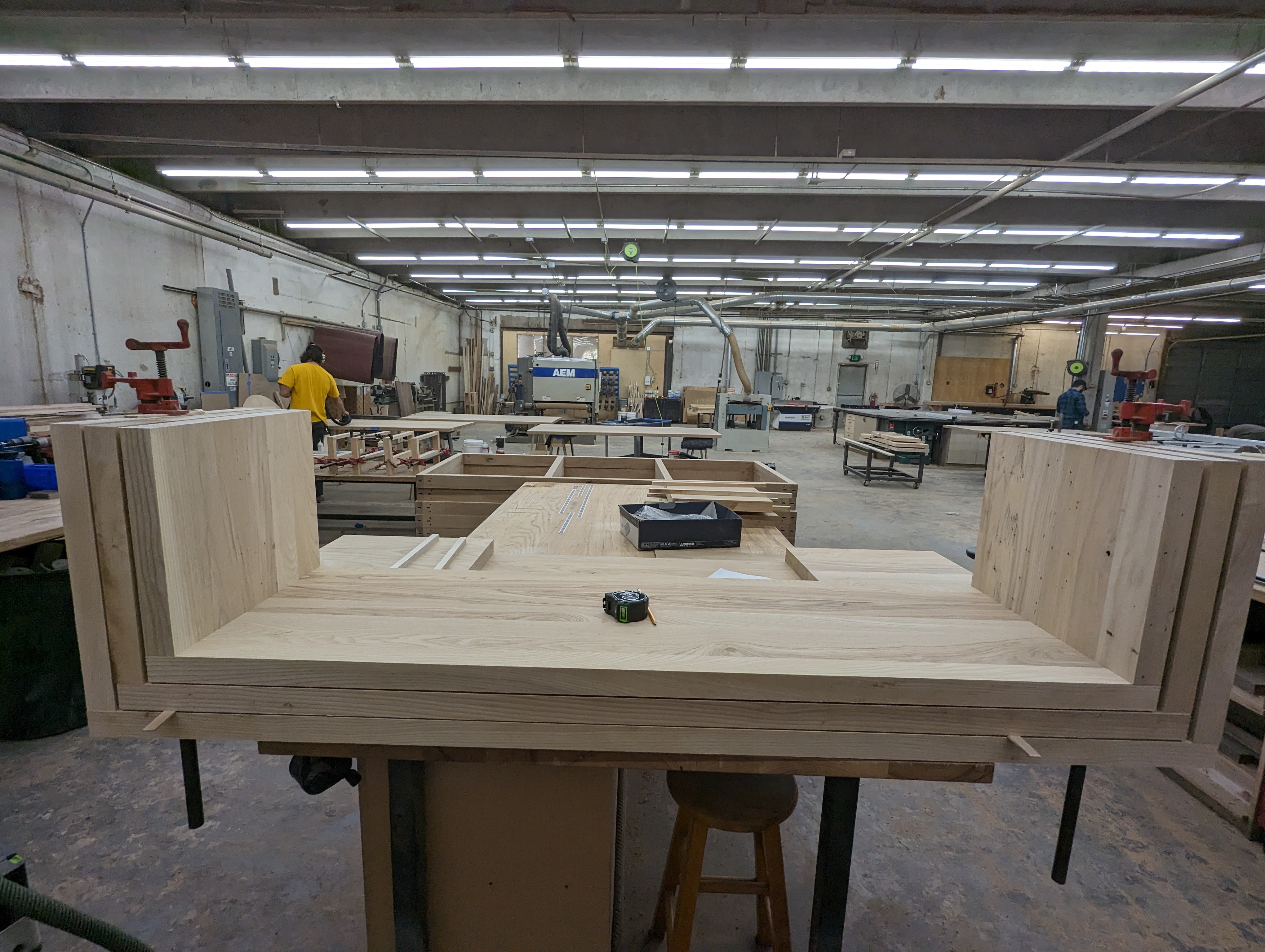
Multi-unit production meant getting the setup right before cutting anything. Every unit had to be dimensionally identical — if any piece was off, the nesting stack wouldn’t sit flat. Batch cuts, consistent reference edges, a finishing sequence that processed multiple parts without creating a bottleneck at any single step.
Installation
Delivery and placement. The design handled the complexity; on-site there was nothing to fit or adjust. The client was very happy with how the benches sat in the space and how the nesting worked in practice. As far as I know, they’re still in service.
- Nesting design reclaims floor space when seating isn't needed — critical for a school that uses the same room multiple ways
- No-apron span solved the nesting constraint without sacrificing structural integrity or adding hidden hardware
- 8/4 ash kept thick enough to carry the span cleanly — the material thickness is the structure
- Hard wax oil finish chosen for easy maintenance under high-traffic, daily use
- SketchUp model let the client see the layout in their space before fabrication began — no surprises on install day
- Stadium configuration maximizes sightlines to the performance area within a compact footprint